Molecular Mechanisms in Drug Discovery and Protein Chemistry
Proteins are versatile macromolecules that constitute a network of structurally complex systems with crucial biological relevance. Through the course of evolution, living cells have adapted machineries that synthesize linear chains of several amino acids and ensure the conformational integrity of folding polypeptides to their native state with defined three-dimensional structures. The remarkable features of protein folding define its functionality by the ability of retaining its proper conformation. Many proteins are nevertheless functional despite their partially or fully unstructured conformations. The outstanding characteristic of such disordered proteins decodes in the generation of proteinaceous aggregates of highly defined structures with abundant cross-β structural motifs, termed amyloid. These amyloidogenic proteins are the basis of pathological processes that embraces numerous diseases, most important being Neurodegeneration. I am engaged in conducting research in the field of fragment-based drug discovery (FBDD) and structure elucidation of small molecules with therapeutic properties (Akoury, et al. 2013, Akoury et al. 2016 , El Kantar et al. 2022). Through a robust and reliable methodology that incorporates NMR spectroscopy, Isothermal Titration Calorimetry (ITC) and Quantum Mechanical Simulations, I emphasize the thermodynamics that govern the processes of bimolecular recognition and the accompanied dynamic features to improve drug design strategies for interaction with specific target biomolecules. I have employed this approach to explore the fundamental principles in protein folding/misfolding and the mechanism of action of aggregation inhibitors in neurodegenerative diseases (ND). The notion of ND is associated with the presence of abundant aggregates of neuritic amyloid plaques and neurofibrillary tangles (NFTs) in the cerebral cortex and is pathologically termed Alzheimer´s Disease (AD). AD is the most widespread dementia syndrome and a term for progressive memory loss and intellectual abilities. One of the hallmarks of AD is the presence of abundant intracellular deposits of the Tau protein. The accumulation of these stable species is a multistep process that involves the formation of various transients. Understanding this key step may eventually enable to obstruct aggregation. As there is still no causative treatment or cure for AD, Tau-based research aims to reveal the pathological consequences of amyloid formation and to implement new therapeutic strategies through identification of aggregation inhibitors as potential disease-modifying drugs. In AD, Tau protein exhibited in the central nervous system loses its ability to bind to MTs and aggregates into NFTs either as straight filaments or Paired Helical Filaments PHFs as well as amorphous non-fibrillar aggregates. The accumulation of these stable species is a multistep process that involves the formation of various transients with large evidences indicating that it is not the larger aggregates but rather the smaller oligomeric species that cause the clinical symptoms (Figure 1). One hexapeptide sequence located in the third repeat, 306VQIVYK311, is mainly responsible for induction of these structural changes.
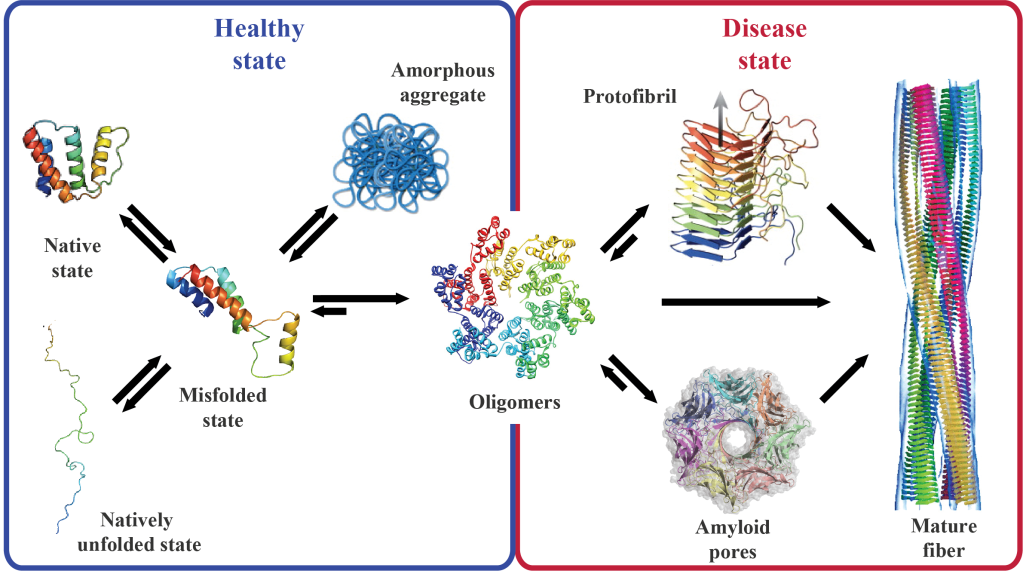
Figure 1 – The Cascade of Protein Folding and Aggregation.
Destabilizing a healthy native state increases the population of the misfolded state. Refolding or degrading pathways along with external factors aim to re-establish proper folding, formation of amorphous aggregates or complete unfolding. The failure of these defensive mechanisms triggers the nucleation of ordered oligomers that assemble into amyloid pores, protofibrils and mature fibers. The whole assembly process provokes cell impairment and gained toxicity that defines this disease state.
Heterochromatin is a distinctive chromatin structure that is essential for chromosome segregation, genome stability and regulation of gene expression. H3K9 methylation (H3K9me), a hallmark of heterochromatin, is deposited by the Su(var)3-9 family of proteins; however, the mechanism by which H3K9 methyltransferases bind and methylate the nucleosome is poorly understood. In a very intricate collaborative work published in the top journal Nucleic Acids Research, we determined the interaction of Clr4, the fission yeast H3K9 methyltransferase, with nucleosomes using nuclear magnetic resonance, biochemical and genetic assays. Our study shows that the Clr4 chromodomain binds the H3K9me3 tail and that both, the chromodomain and the disordered region connecting the chromodomain and the SET domain, bind the nucleosome core. We show that interaction of the disordered region with the nucleosome core is independent of H3K9me and contributes to H3K9me in vitro and in vivo. Moreover, we confirmed that the interactions with the nucleosome core are contributing to de novo deposition of H3K9me and to establishment of heterochromatin. In recent years, significant technical advances in instrumental design and detection technology have improved scientific achievements in solving large protein structures with high resolution. Importantly, the combination of NMR and cryo-EM allows to not only resolve smaller proteins at high resolution but also to examine entire protein complexes as one large macromolecular structure. This offers the advantage of providing structural details about the dynamics of protein domains and molecular modeling at complete atomic resolution. Cryo-EM provides direct images of macromolecules and evidence on the stability and dynamics of a complex. An initial 3D model of the structure further supports the determination of higher resolution structures by other methods. On the other hand, the NMR chemical shifts are sensitive probes that highlight secondary structures and conformational changes of a protein as well as interaction interfaces with other binding partners. Exclusively, Cryo-EM complements NMR studies of individual proteins or domains and assists in the generation of mechanistic models to describe the relevant physiological functions. In this perspective, my approach combines cryo-EM with NMR spectroscopy to solve the high-resolution structure of the Clr4 protein bound to the methylated H3K9 nucleosome. Clr4 is a methyltransferase that subsequently methylates Lysine 9 (K9) of the H3 histone protein. The complex is embedded in vitreous ice and imaged at cryogenic temperatures in transmission mode electron microscope. A reconstruction from cryo-EM images creates the 3D structure from the individual particle images and the resulting structure is of extremely high resolution. We have combined the cryo-EM density maps with solution NMR spectroscopy to solve the structure at atomic resolution and build a more accurate model (Figure 2). No structural information is currently available for any heterochromatic protein or complex bound to the nucleosomes. Therefore, this work provides the structural framework for understanding how the chromatin modification recruits specific proteins and how this process can modify the chromatin structure.
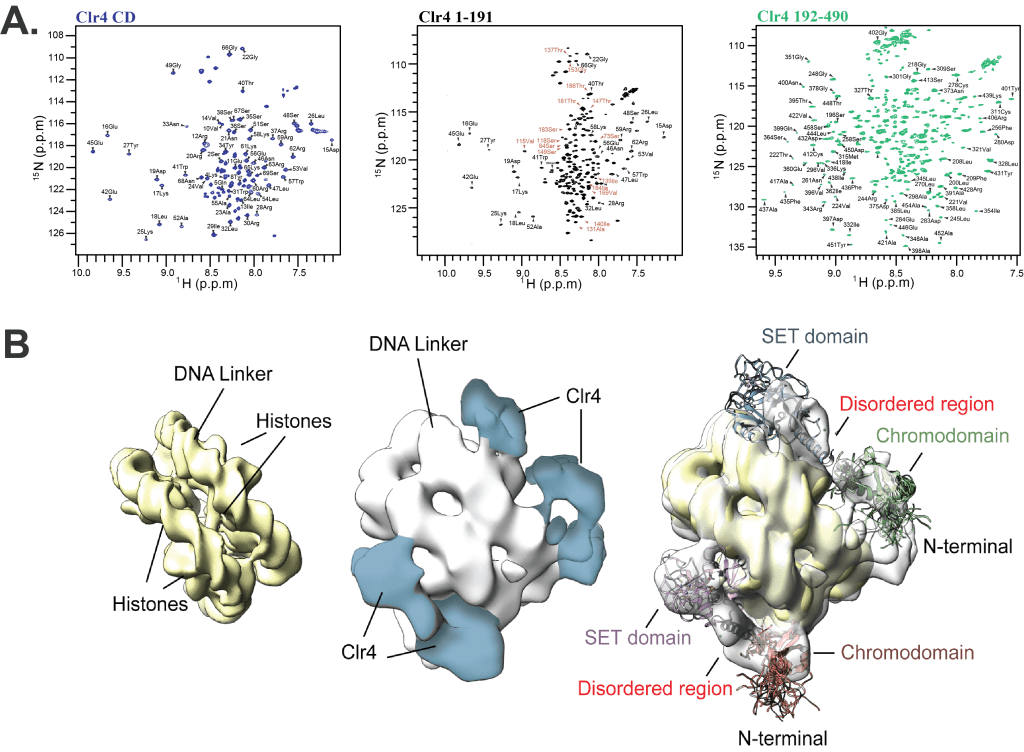
Figure 2 – Structural Insights into Clr4 Methyltransferase-H3K9 Methylated Nucleosome Complex
(A) Two-dimensional 1H-15N HSQC spectra of Clr4 protein constructs with backbone amide assignments. (B) Molecular docking of the H3K9 nucleosome crystal structure (PDB 1AOI), the Clr4 CD NMR solution structure (PDB 1G6Z yellow) and the crystal structure of Clr4 Pre-SET-post domains (PDB 1MVH, green) into the cryo-EM Clr4 FL-H3KC9me3 nucleosome complex map. (C) Docking of Clr4 Chromodomain NMR solution structure (PDB 1G6Z yellow) and the crystal structure of Clr4 Pre-SET post domains (PDB 1MVH, green) into the cryo-EM Clr4 FL-H3KC9me3 nucleosome complex map.
Emerging Contaminants in Food Sciences and Maritime Environments
Emerging contaminants, encompassing a wide range of chemical substances such as heavy metals, pharmaceuticals, and microplastics, have garnered increasing worldwide attention due to their potential impacts on both food sciences and maritime environments. In food systems, these contaminants may enter the supply chain through agricultural practices, water sources, or packaging materials, posing potential risks to human health and food safety. In maritime environments, they threaten aquatic ecosystems, bioaccumulating in marine organisms and compromising the health of underwater archaeological sites, which are sensitive to chemical changes in their surroundings. Understanding the behavior and effects of these contaminants is crucial for developing effective mitigation strategies.
Thyme herbs constitute a major part of the Mediterranean diet and are gaining worldwide popularity. However, their chemical contamination with toxic metals may put consumers at a health risk. We assessed the occurrence of Arsenic (As), Cadmium (Cd), Lead (Pb) and Mercury (Hg) in thyme-containing products analyzed by Inductively Coupled Plasma Mass Spectrometry (ICP-MS) (Akoury, Baroud, El Kantar et al. 2022 ). 11%, 22%, and 86% of samples had unacceptable levels of As, Hg and Pb respectively according to the international standards set by Codex Alimentarius. This study highlighted the importance of monitoring and enforcing regulatory actions related to the contamination of the food chain with heavy metals. In a similar approach, we highlighted the possible contamination of heavy metals in irrigation water and agricultural soil that affects crop. Parsley was grown in soil for 9 weeks and exposed to different Cd concentrations to measure accumulation effects on the physiology of crop production (Akoury, El Kantar, Abdallah et al. 2023 ). Cd content in parsley increased with amplified Cd soil concentration with higher escalation in roots (1.6 mg/kg) than shoots (0.01 mg/kg). The study revealed that Cd causes significant decrease in total fresh and shoot fresh weights and in chlorophylls a, b, and total chlorophyll. Cd-treated plants showed a significant increase in total sugar and amino acid contents suggesting the induction of a potential stress on the plant. Potentially, parsley remains safe for consumption with low risk to human health when grown in cadmium-polluted soils. Within an international collaboration, we also quantified toxic metals in rice using ICP-MS to determine factors affecting its contamination, and evaluate exposure from its consumption in Lebanon and United Arab Emirates (Akoury, Mansour, Reda et al. 2022 ). For As, Cd, Hg and Pb, in UAE, 9%, 1%, 100%, and 69% of samples exceeded the international limits, while in Lebanon, 25%, 73%, 100%, and 69% of samples were above limits, respectively. For As, in Lebanon, brown rice, long grains and brands from developed countries were significantly more contaminated, while in UAE, packing season, country of origin, and collection time had significant effect. For Cd, collection time had significant effect in Lebanon and UAE. Regarding Cr, in Lebanon, country of origin, grain size, rice type, and time between packing and purchasing had significant effect, while in UAE, collection time had significant effect. For Hg, collection time had significant effect in Lebanon and UAE. Alarming exposure levels for Hg and Pb from rice were detected in the UAE.
Growing concerns over the widespread use of pesticides and their presence in food chain raise questions about potential health risks and long-term environmental impact. The intensive use of pesticides in agricultural areas and the resulting effects have created a need to develop monitoring programs for their active assessment. We conducted a biomonitoring study of the pesticides in an apple orchard where snails were deployed at three different locations in the orchard area and were used to assess the biomonitoring of 100 different semi-volatile and non-volatile pesticides (Al Alam, Millet, Khoury et al. 2022 ). The study was performed over an 18-week period and targeted the center, the border, and the outside of the orchard. Results showed that greater levels of pesticides were detected at the center of the orchard as compared to the other sites. The type and level of the applied pesticide influenced its environmental dissipation, as significantly greater levels of semi-volatile pesticides were accumulated by the caged snails in comparison to non-volatile pesticides. The presence of semi-volatile pesticides in the snails outside the orchard revealed the usefulness of these species in the biomonitoring of off-site pesticide emissions. In another investigation, Helix aspersa were used to assess the spatial and temporal bioaccumulation of Cd, Cr, Cu, Fe, Mn, Ni, Pb, and Zn at two agricultural and two industrial sites in Lebanon(Al-Alam, Millet, Harb et al. 2022 ). The study was performed over a 12-week period where caged snails were sampled once every 3 weeks and assessed for metal bioaccumulation and partitioning between soft tissue and shells. Results showed that metal bioaccumulation by snails was site dependent, with Fe and Cd being the greatest and least accumulated metals, respectively. The results of this field study indicate that H. aspersa are well suited for active biomonitoring and could provide reliable information on metal pollution and bioavailability.
In recent years, a worldwide concern about the presence of persistent organic pollutants (POPs) in the environment was alarming due to their toxicity, bioaccumulation, and resistance to degradation. Various conventional monitoring techniques have been used to assess their presence in diverse environmental compartments. However, most of the available methods have limitations with regards to long-term monitoring. In our recent work, Cornu aspersum snails were tested in field microcosms as bio monitors for two major classes of organic pollutants, polycyclic aromatic hydrocarbons (PAHs) and polychlorinated biphenyls (PCBs) (Al-Alam, Millet, Khoury et al. 2023 ). The study assessed their deployment in one suburban, one rural, and two industrial sites over an 18-week period and monitored for temporal variations of 16 PAHs and 22 PCBs. Sampling was conducted once every 3 weeks. Targeted pollutants were extracted from the caged snails and subsequently analyzed using gas chromatography coupled to tandem mass spectrometry (GC-MS/MS). The results showed that the bioaccumulation of specific pollutants was site dependent; significantly higher levels of PCBs were observed at the industrial sites as compared to the suburban and rural ones. PAHs were bioaccumulated by the snails via ingestion of air and soil whereas PCBs were mainly bioaccumulated via soil contact and ingestion.
While the impact of emerging contaminants on food sciences has gained significant attention, it’s equally crucial to consider their effects on maritime environments, where these contaminants pose unique challenges to underwater ecosystems. The eastern Mediterranean Sea, a crucial nexus of environmental and cultural significance, is increasingly facing threats from emerging contaminants. Despite critical implications of these contaminants, their analysis in the Mediterranean Sea, precisely in Lebanon, remains largely unexplored. The natural occurrence of heavy metals is overshadowed by anthropogenic activities, leading to their accumulation in compartments like soil and water body sediments. Elevated levels arise from natural phenomena such as rock weathering and combustion of fossil fuels. The release of agricultural, industrial, household waste and pesticides also show significant contribution. Some metals have low solubility and are mostly adsorbed to the solid phase on sediments and submerged bodies. Simultaneously, microplastics accumulate in marine environment and release toxic molecules that interfere with marine species and archeological artifacts.
Methodology Development in NMR Spectroscopy
NMR spectroscopy is based on the interaction of nuclear magnetic momenta in atoms with an external magnetic field and the readout of resonance frequencies, lifetimes of non-equilibrium states, and spatial nuclear spin proximities. Quantum mechanics defines the theoretical description of NMR spectroscopy and treatment of the dynamics of these nuclear spin systems. Employing these principles, the technique can assess molecular structure and thermodynamic properties of proteins and organic molecules with atomic resolution. The structural elucidation is obtained by characterization of chemical shifts, inter-atomic distances, and the size of other interactions, whereas dynamics are mostly represented by the lifetimes of different non-equilibrium states in addition to inter-nuclear interactions. Solution-state NMR represents abundant tools for the elucidation of molecular configuration, conformational exchange, and interactions whereas solid-state NMR provides detailed information on chemical bond parameters like asymmetry as well as distances and higher order organization.
In one of my research projects, I have developed a method for the structural determination of small molecules by using an internal alignment medium through non-covalent paramagnetic lanthanide tags (Yassin, Nehmeh, Kantar et al. 2022). The alignment of molecules with the magnetic field paramagnetically induces residual dipolar couplings (RDCs), paramagnetic relaxation enhancements (PREs) and pseudo-contact shifts (PCSs) (Figure 3). These parameters contain valuable information for accurate structure determination of the relative and absolute configurations of small molecules as well as the relative concentrations of enantiomers provided global orientation information of magnetic dipole-dipole interaction vectors within a common reference frame. This offers accessibility of distance-independent angular information and insights to local relaxation. An anisotropic orientation medium containing a paramagnetic lanthanide centre partially aligns the molecules along the magnetic field. Quantum Mechanical and Ab initio calculations of the local complex structure, the alignment tensor, then determines the induced RDCs and PCSs. Different chiral lanthanide tags, in particular Europium (III)-based shift were tested for the absolute configuration in several molecules.
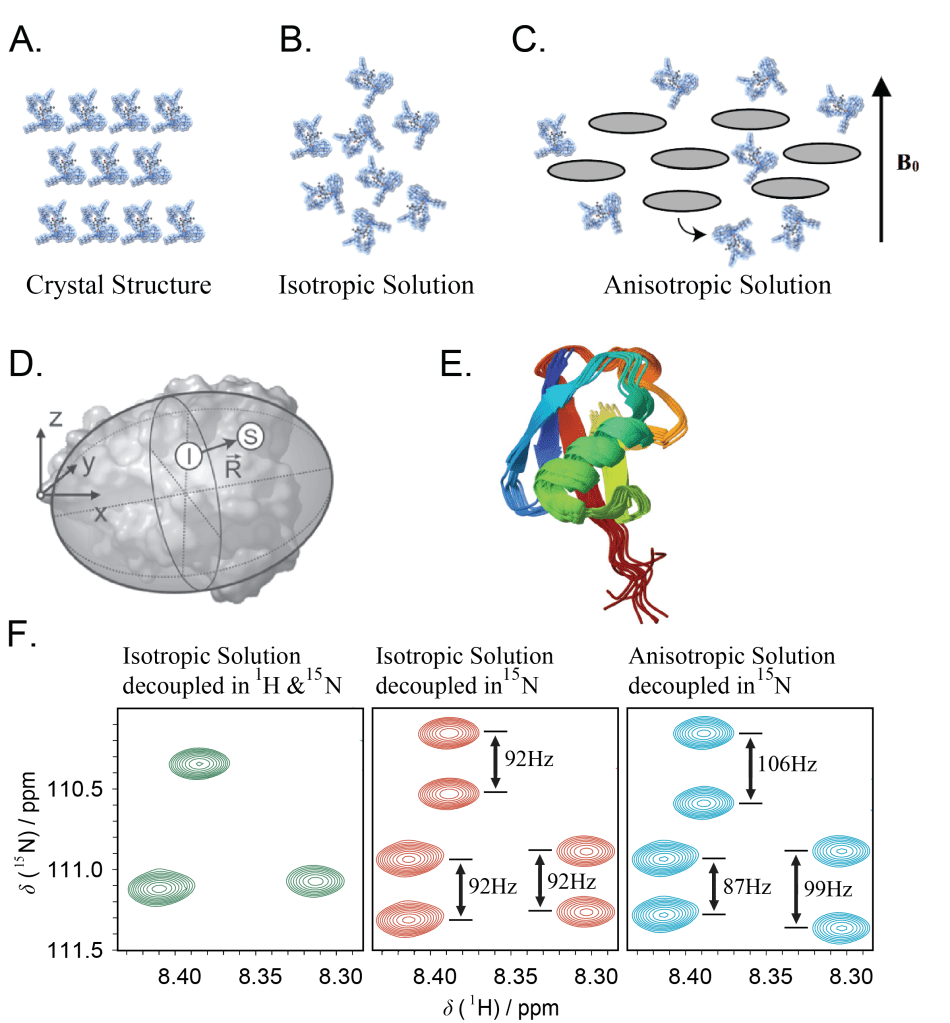
Figure 3 – Alignment of Molecules in Homogeneous Magnetic Field Behavior of a molecule (red) in the magnetic field B0(A) in a single crystal form, (B) in isotropic solution and in (C) anisotropic solution with a partially oriented medium (grey). (D) Representation of the probability tensor and the effect of molecular tumbling of a rigid molecule in the molecular frame reference system. (E) Reconstitution of the protein conformations from Quantum Mechanical calculations. (F) RDC Measurements from 2D 1H-15N HSQC NMR spectra of the aligned molecules
 BioPhysical Chemistry Research Group